DataCores Lab · Lab Without Magic
The Algorithm We Couldn't Find
We rebuilt an odds-only signal laboratory, tested its strongest ideas against market prices, and closed the branch without a production candidate.
This is not betting advice. It is a public research record.
The series is about data contracts, false miracles, execution timing, and why a trustworthy negative result can be more valuable than a fragile positive one.
The complete series
Four parts. One closed loop.
Plain-language notes and selected long-form postmortems from the research side of DataCores: what we tested, what failed, how records were verified, and which conclusions survived.
The Ocean of Algorithms and the First Rocket
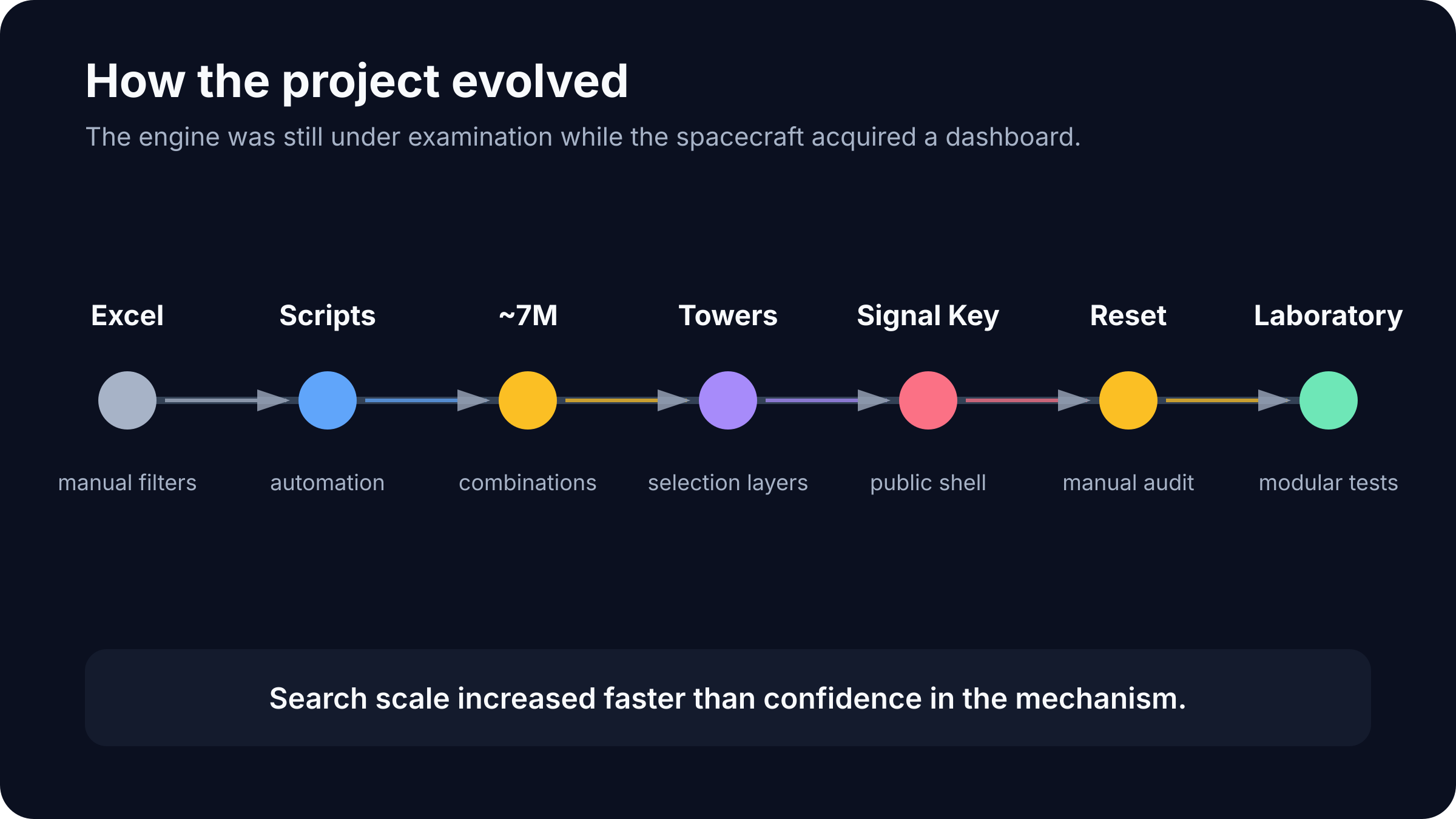
How a manual Excel hypothesis became millions of combinations, a public product, and an expensive lesson: search scale is not signal quality.
Read part I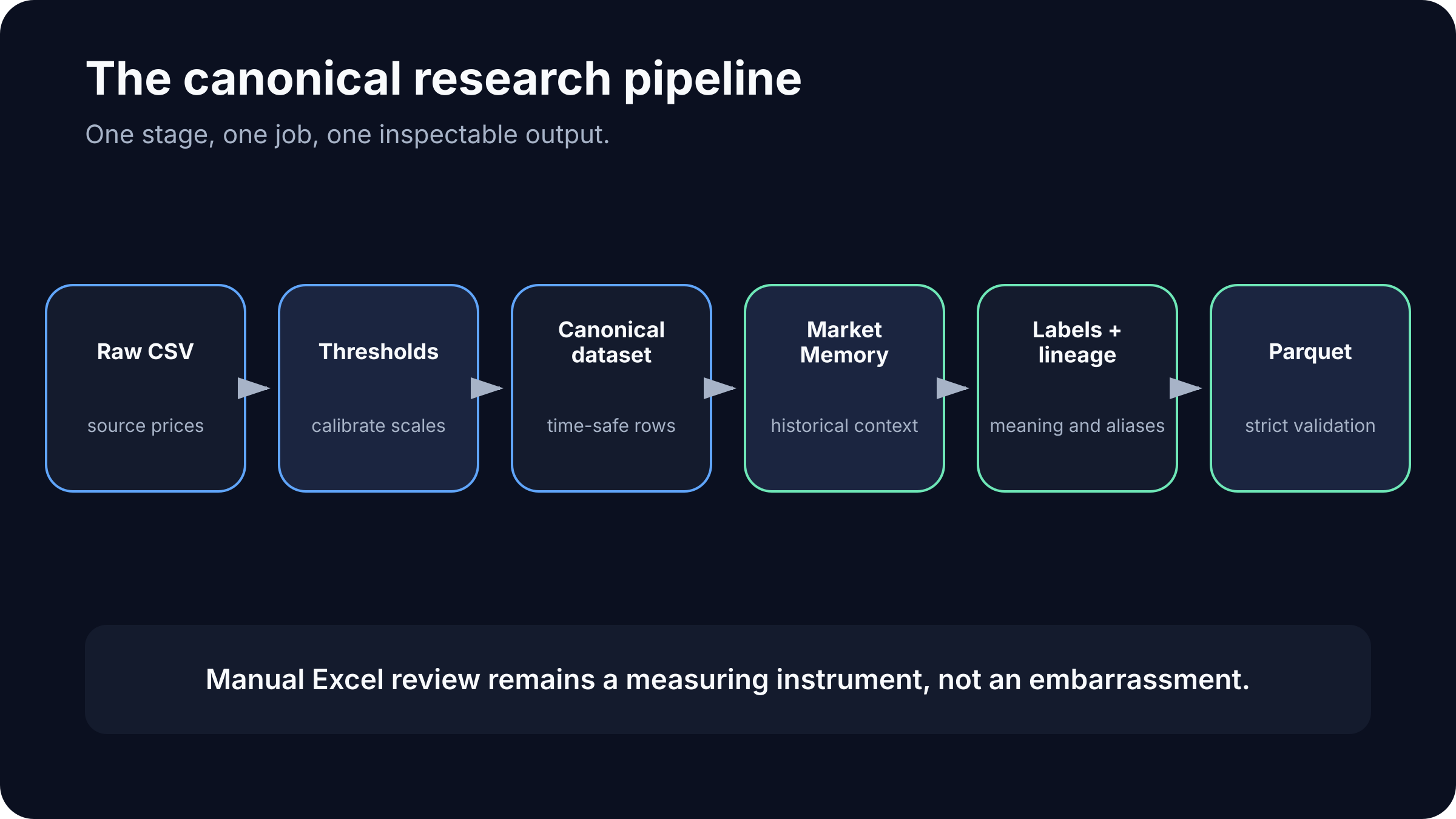
Build the Laboratory, Not the Legend
How we rebuilt the data contract, found a movement-metric transfer error, separated individual and global scales, and turned a pile of prices into an auditable laboratory.
Read part II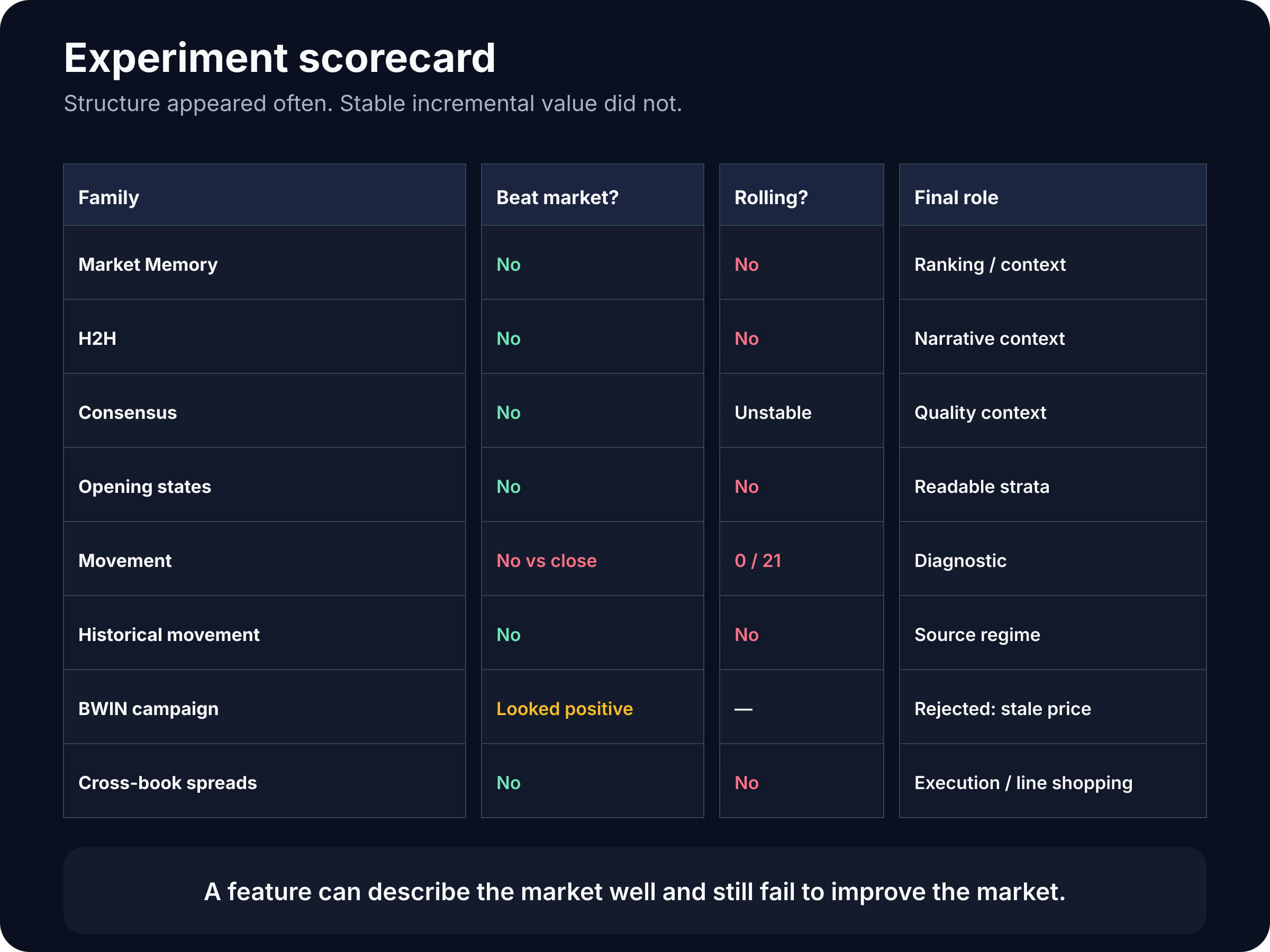
Make the Miracle Show Its Papers
Market Memory, H2H, consensus, movement, manual campaigns, and one profitable-looking result that vanished when execution time was checked.
Read part III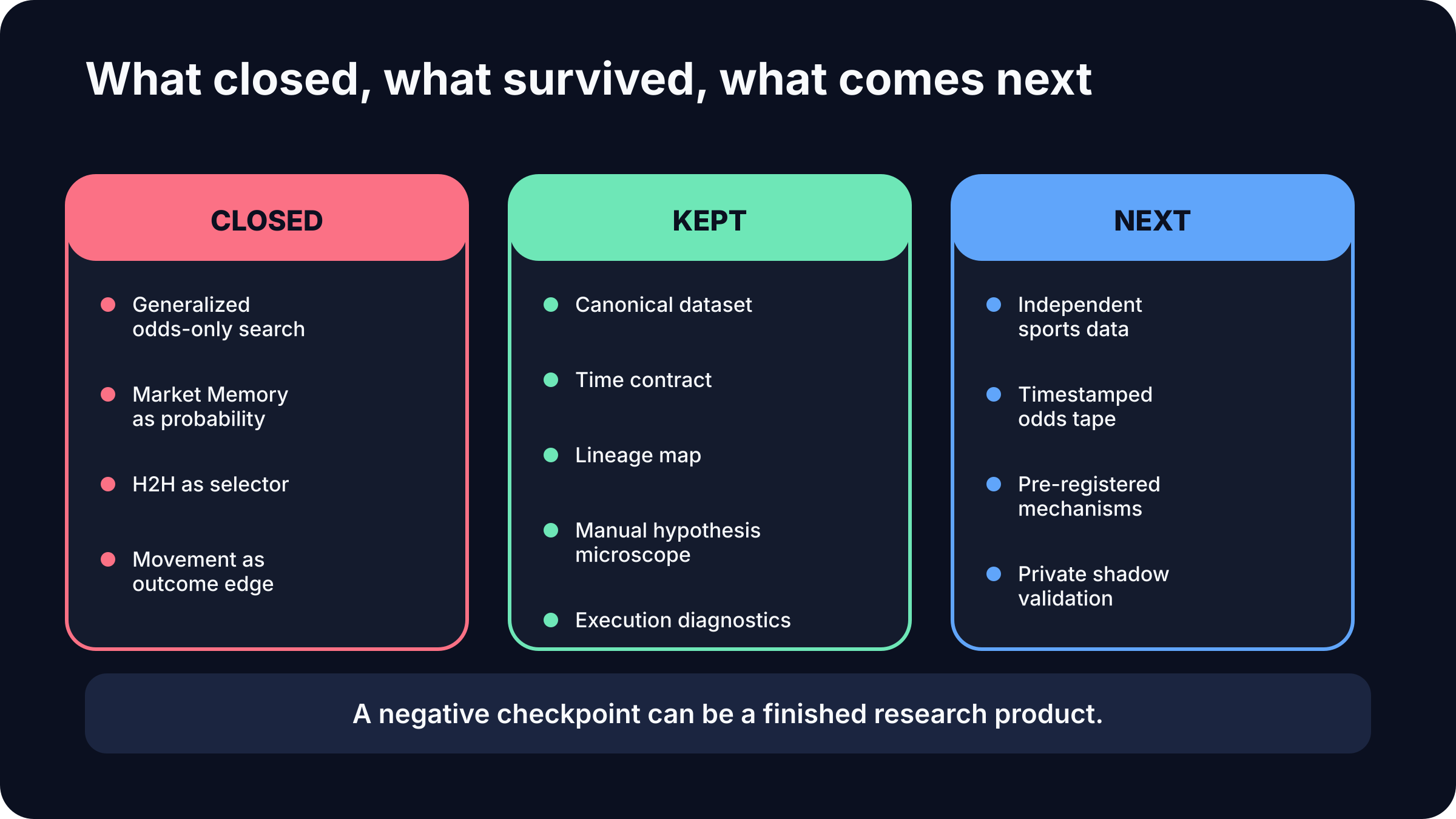
Zero Production Candidates Is Not Zero Results
Why we closed the generalized odds-only search, what survived a year and a half of work, and why an honest negative checkpoint can be a finished research product.
Read part IVResearch boundary
The branch closed. The laboratory stayed.
No production candidate survived in the tested odds-only space. The canonical dataset, time contract, lineage, execution diagnostics, and the discipline to stop tuning did.